How to Measure Whether an AI Workflow Is Actually Working
Time saved per task can improve while the whole process takes just as long. Here are the four workflow-level numbers that show whether an AI deployment changed anything.
Practical writing on AI systems, agents, automation, and lessons from building.
Time saved per task can improve while the whole process takes just as long. Here are the four workflow-level numbers that show whether an AI deployment changed anything.
A teardown of the prior authorization workflow and where an AI-native version would draft, track, and appeal requests while a licensed reviewer keeps the approve-or-deny call.
A liability-based framework for deciding which decisions must stay human when you embed AI into business operations, and which are just coordination work.
The old route for contract review is email, PDFs, and Word track changes. Here's how I'd design an AI-native system that compares against a playbook and keeps judgment calls human.
A teardown of why onboarding stays slow across HR, IT, and payroll, and how a coordination layer, not a chatbot, would fix the handoff.
A system teardown of vendor onboarding: why chasing tax forms, insurance certificates, and bank details still takes weeks, and what an AI-native intake and risk-tiering system would automate versus keep human.
Adding an AI agent to a broken workflow rarely fixes it. Here's why the failure is usually the process, not the model and what to map before you automate.
A system teardown of expense report reconciliation: why the old route of receipts, card statements and spreadsheets persists, and what an AI-native coordination layer would look like.
Most AI adoption fails not because the model is bad, but because teams skip the workflow redesign and bolt AI onto a broken coordination layer. Here is where adoption should actually start.
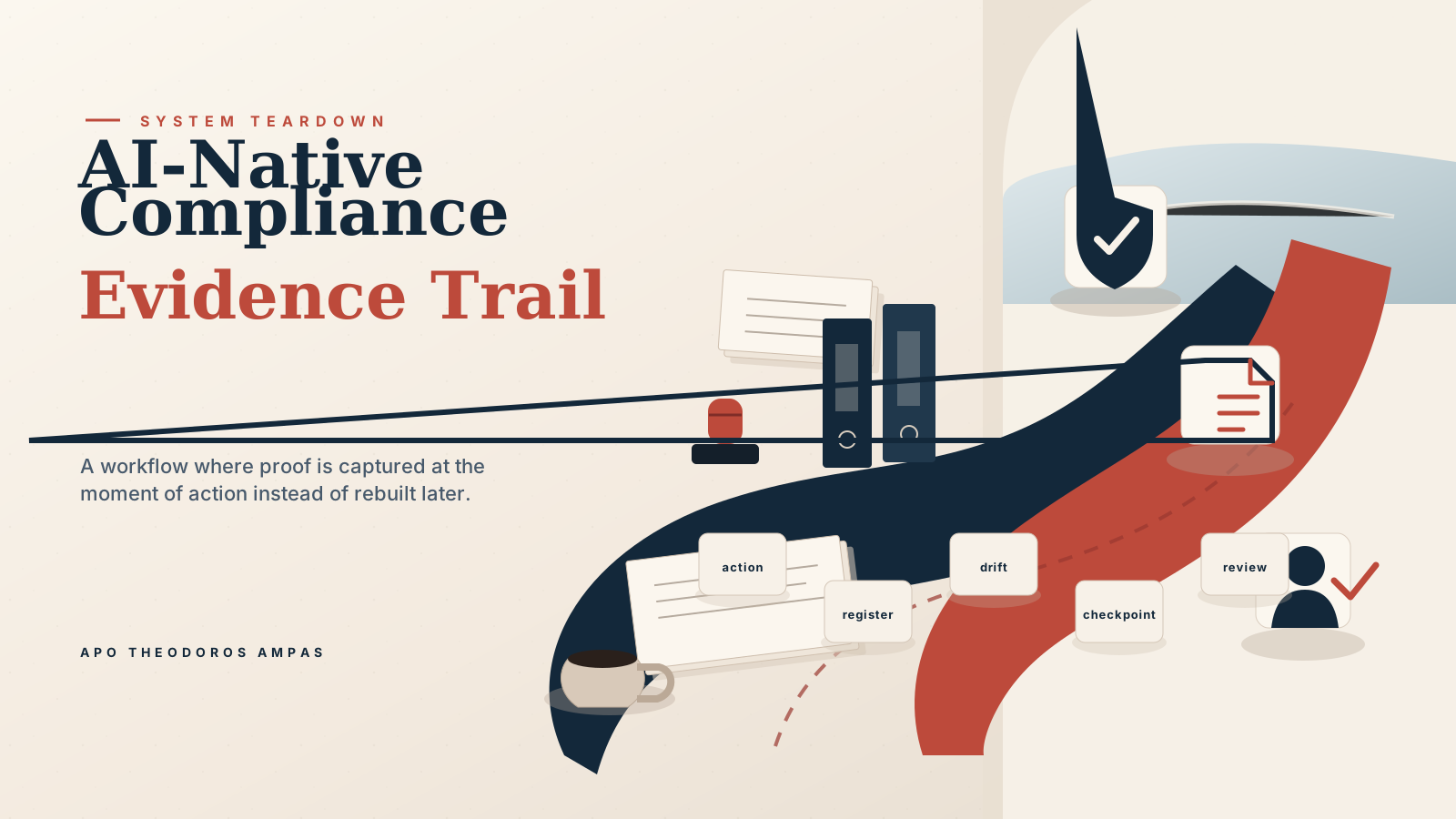
An old-route-to-AI-route teardown of AI compliance: why evidence of human review gets reconstructed after the fact, and what it looks like when it's captured automatically instead.