AI Research Agent: How to Get Sourced Briefs Without Paying for Searches Nobody Reads
An AI research agent gathers what is known about a company, a contact or a question, with sources, before a person needs it. The design problems are cost, confidence and knowing when not to run. Here is the shape.
On this page
An AI research agent is an agent with search and retrieval tools, given a subject and a question, that gathers what is known from public sources and the company’s own records, reads it, and writes a brief in which every claim is tied to a source and every gap is marked as a gap. It exists because a person spends an hour reading before most decisions that matter, and the reading is the same shape every time. The design problems are not whether the model can read. They are cost, honesty about confidence, and knowing when not to run at all.
Direct Answer
An AI research agent is worth building when a team repeatedly spends time gathering the same kind of information before a decision: a sales call, an interview, a vendor meeting, an offer on a property. The agent searches, retrieves from your own records, reads, and writes a brief with sources on every claim and explicit gaps where it found nothing. The three rules that make it useful are: cite or omit, mark confidence, and run only on a trigger a person set. Without those it produces fluent briefs with invented facts, at a cost that scales with every record in the database.
Key Takeaways
- The value is the hour of reading turned into ten minutes of checking. The analyst still decides.
- Cite or omit. A claim without a source does not go in the brief.
- Mark confidence. “Two sources agree” and “one blog post says” are different sentences.
- Run on triggers, not schedules. Research that nobody reads is the most expensive kind.
What does an AI research agent produce?
| Section of the brief | Source | Confidence marking |
|---|---|---|
| Facts about the subject | Public sources: site, filings, press, profiles | Each fact cites its source |
| History with us | Your CRM, inbox, past notes | Cited to the record |
| Signals relevant to the question | Recent changes, hires, news, complaints | Marked by how many sources agree |
| Gaps | Explicit list of what could not be confirmed | Always present |
| Suggested questions | What the person should ask to close the gaps | Optional |
IBM’s overview of AI agents covers the agent loop. The retrieval half, where the agent reads your own records rather than the web, is described in IBM’s retrieval-augmented generation overview. The brief format is the part most builds skip, and it is where trust is won or lost: a brief with a gaps section is one a person can rely on; a brief without one has hidden the gaps inside confident sentences.
Why do research agents invent facts?
Because a language model asked to write a brief will write a brief. If the search returned nothing useful about the subject’s revenue, the model still has a sentence about revenue to write, and it will write a plausible one.
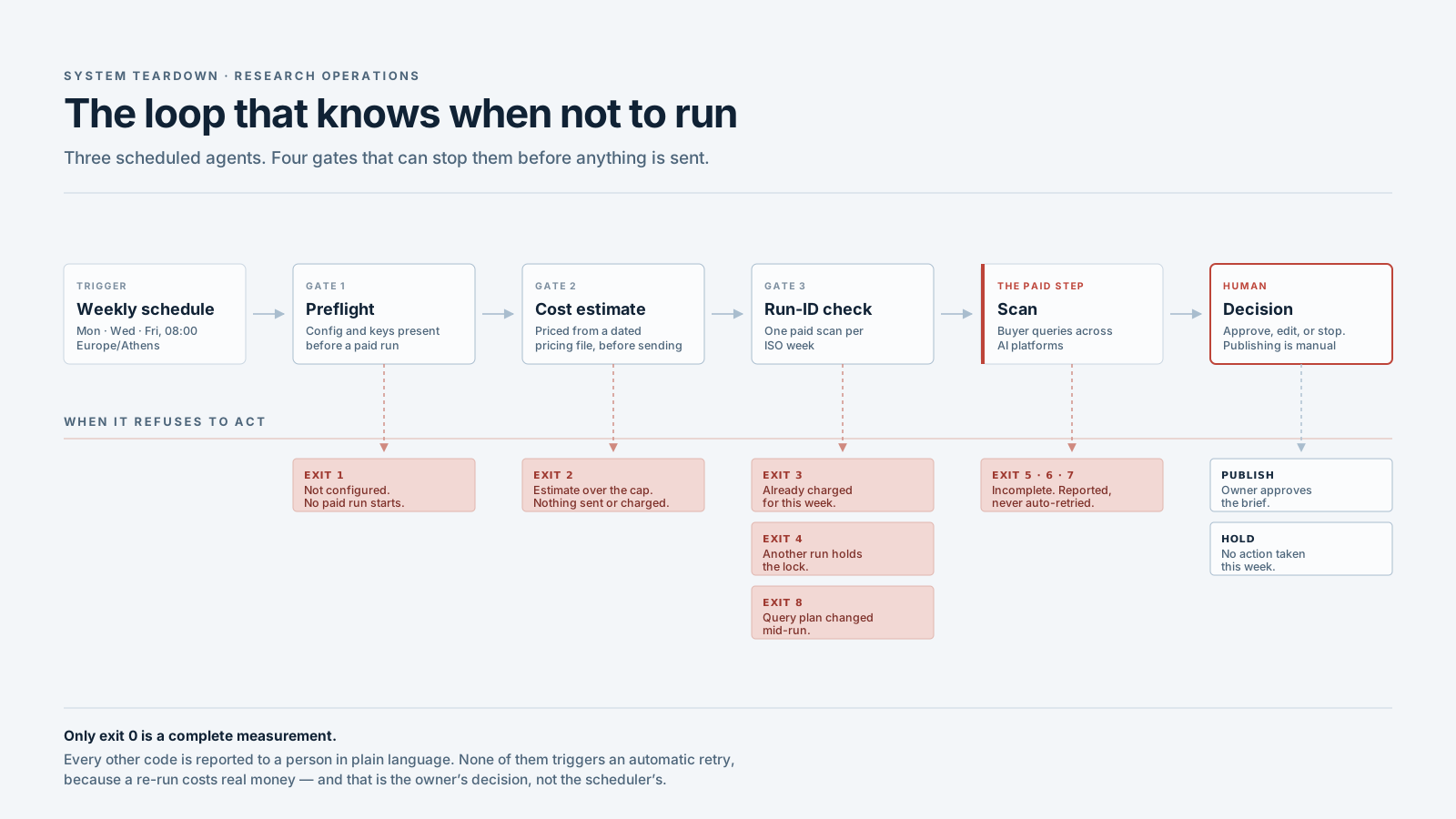
The fix is a rule enforced in the output format, not the prompt: every claim carries a source reference or it is deleted, and every section that found nothing says so. That makes the brief shorter and less impressive. It also makes it true. The related failure is running research on subjects that do not need it, which is a cost problem rather than an accuracy one. The design for deciding when not to run is set out in the research loop that knows when not to run.
How to build an AI research agent
- Pick one decision. Sales calls, interviews, vendor meetings, offers. Where does a person read for an hour first?
- Write the brief template. The sections above, in the order the decision-maker reads. Gaps section mandatory.
- List the sources. Public: the subject’s site, registries, press, profiles. Internal: CRM, inbox, past briefs. Each as a tool with read-only access.
- Define the trigger. A call booked. An interview scheduled. A record moved to a stage. Never “every record, nightly”.
- Build the loop with cite-or-omit enforced. Developers implement the search and retrieval tools through tool-calling; OpenAI’s function calling guide is the reference. The output format rejects unsourced claims.
- Review briefs against reality for two weeks. The person who used each brief marks what was wrong and what was missing. Both become rules.
- Measure. Minutes of preparation per decision before and after, and the count of wrong claims found by the reader.
What an AI research agent is not
It is not an analyst. It gathers and cites. The person reads, checks the claims that matter, and decides.
It is not a nightly job on the whole database. That produces thousands of briefs nobody reads at a cost that shows up on the invoice. Research runs when a decision is coming.
And it is not a source of confident summaries. A brief that reads smoothly and cites nothing is the failure mode, not the goal. The sales-specific use is described in AI lead generation, and a property due diligence version in how I would build a property due diligence system.
Summary
An AI research agent turns the hour of reading before a decision into ten minutes of checking a sourced brief. It works when every claim is cited or omitted, confidence is marked, gaps are listed, and it runs only on a trigger a person set. Pick one decision, write the template, list the sources, enforce cite-or-omit in the output, and measure preparation time and wrong claims. The wider library is under AI agents; the engagement that builds one inside your CRM and records is sales and marketing intelligence.
Frequently asked questions
What does an AI research agent do?+
Given a subject and a question, it searches public sources and your own records, reads what it finds, and writes a brief with every claim tied to a source. It flags what it could not confirm rather than filling the gap.
How accurate is an AI research agent?+
As accurate as its sources and its honesty about gaps. A well-designed agent cites every claim and marks low-confidence ones. A badly designed one produces a fluent brief with invented facts, which is worse than no brief.
What does it cost to run?+
Searches and model calls per brief, which adds up if the agent runs on every record. The design decision that controls cost is when it runs: on a trigger a person set, not on a schedule for everything.
Where is an AI research agent used?+
Sales, before a call. Hiring, before an interview. Due diligence, before an offer. Procurement, before a vendor meeting. Anywhere a person spends an hour reading before a decision.
Can it replace an analyst?+
It replaces the gathering. The analyst reads the brief, checks the claims that matter, and makes the judgment. The hour of reading becomes ten minutes of checking.